Hoof boots can effectively protect your horse’s hooves in winter by providing traction, warmth, and shielding against harsh conditions. They are a versatile option for horses that are barefoot or need extra protection during the colder months.
Why Use Hoof Boots in Winter?
Hoof boots are an excellent choice for winter because they offer several benefits that help maintain hoof health and overall comfort for your horse. These benefits include:
- Traction: Hoof boots improve grip on slippery surfaces, reducing the risk of slips and falls.
- Protection: They shield hooves from ice, snow, and debris, preventing injuries and hoof damage.
- Warmth: Hoof boots can help keep hooves warm, which is crucial for blood circulation in cold weather.
How to Choose the Right Hoof Boots for Winter
Selecting the right hoof boots involves considering several factors to ensure they meet your horse’s needs:
- Size and Fit: Proper fit is critical. Measure your horse’s hooves accurately and refer to the manufacturer’s sizing chart.
- Material: Choose durable materials that withstand winter conditions, such as rubber or neoprene.
- Design: Look for boots with secure closures and drainage features to prevent moisture buildup.
Types of Hoof Boots
Hoof boots come in various designs, each offering unique benefits. Here are some popular options:
| Feature | Easyboot Trail | Cavallo Simple Boot | Renegade Hoof Boot |
|---|---|---|---|
| Price | $65 | $90 | $175 |
| Traction | Good | Excellent | Superior |
| Durability | Moderate | High | High |
| Closure Type | Velcro | Velcro | Buckle |
How to Care for Hoof Boots in Winter
Proper care and maintenance of hoof boots ensure their longevity and effectiveness:
- Clean Regularly: Remove dirt and debris after each use to prevent wear and tear.
- Inspect for Damage: Check for any signs of wear or damage and repair or replace as needed.
- Store Properly: Keep boots in a dry, cool place when not in use to prevent material degradation.
Tips for Using Hoof Boots in Snow and Ice
Using hoof boots in snowy and icy conditions requires some additional considerations:
- Add Studs: Some hoof boots allow for the addition of studs, which can enhance traction on icy surfaces.
- Monitor Fit: Regularly check the fit, as hooves can change shape slightly in different weather conditions.
- Use Liners: Consider using liners for added warmth and moisture wicking.
People Also Ask
What are the benefits of using hoof boots?
Hoof boots provide protection, support, and comfort for horses, especially those with sensitive hooves or those transitioning from shoes to barefoot. They are versatile for various terrains and conditions, including winter.
Can hoof boots be used for riding?
Yes, many hoof boots are designed for riding and provide excellent traction and protection. Ensure the boots you choose are suitable for the type of riding you plan to do.
How do I know if my horse needs hoof boots?
If your horse is barefoot and experiences discomfort on rocky or hard surfaces, or if you notice excessive wear or chipping of the hooves, hoof boots may be beneficial. Consult with a farrier for personalized advice.
Are hoof boots better than traditional horseshoes?
Hoof boots offer flexibility and are a temporary solution, while horseshoes provide a permanent option. Hoof boots are ideal for horses that only need protection occasionally or are transitioning to barefoot.
How long can a horse wear hoof boots?
Horses can wear hoof boots for several hours at a time, depending on the activity and environmental conditions. It’s important to remove them regularly to inspect for any signs of irritation or discomfort.
Conclusion
Hoof boots are a valuable tool for protecting your horse’s hooves during the winter months. By providing traction, warmth, and protection, they help maintain hoof health and prevent injuries. Choosing the right boots and maintaining them properly will ensure your horse stays comfortable and safe in cold weather. For more information on hoof care and winter horse management, consider consulting with a professional farrier or equine veterinarian.
Related Posts
- Can standing still training help with saddle fitting?
- How do you clean a sheepskin saddle pad?
- Are there specific plants that can help in reducing horse parasites?
- How do you know if a horse respects you?
- What types of music are best for calming horses?
- Is it true that negative reinforcement is more common in traditional horse training?
- What are the differences between Andalusian and other Iberian horses?
- What are the common mistakes in managing a horse's water supply?
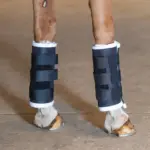 Teaching your horse to accept leg wraps
- What role does relaxation play in a horse's jumping performance?